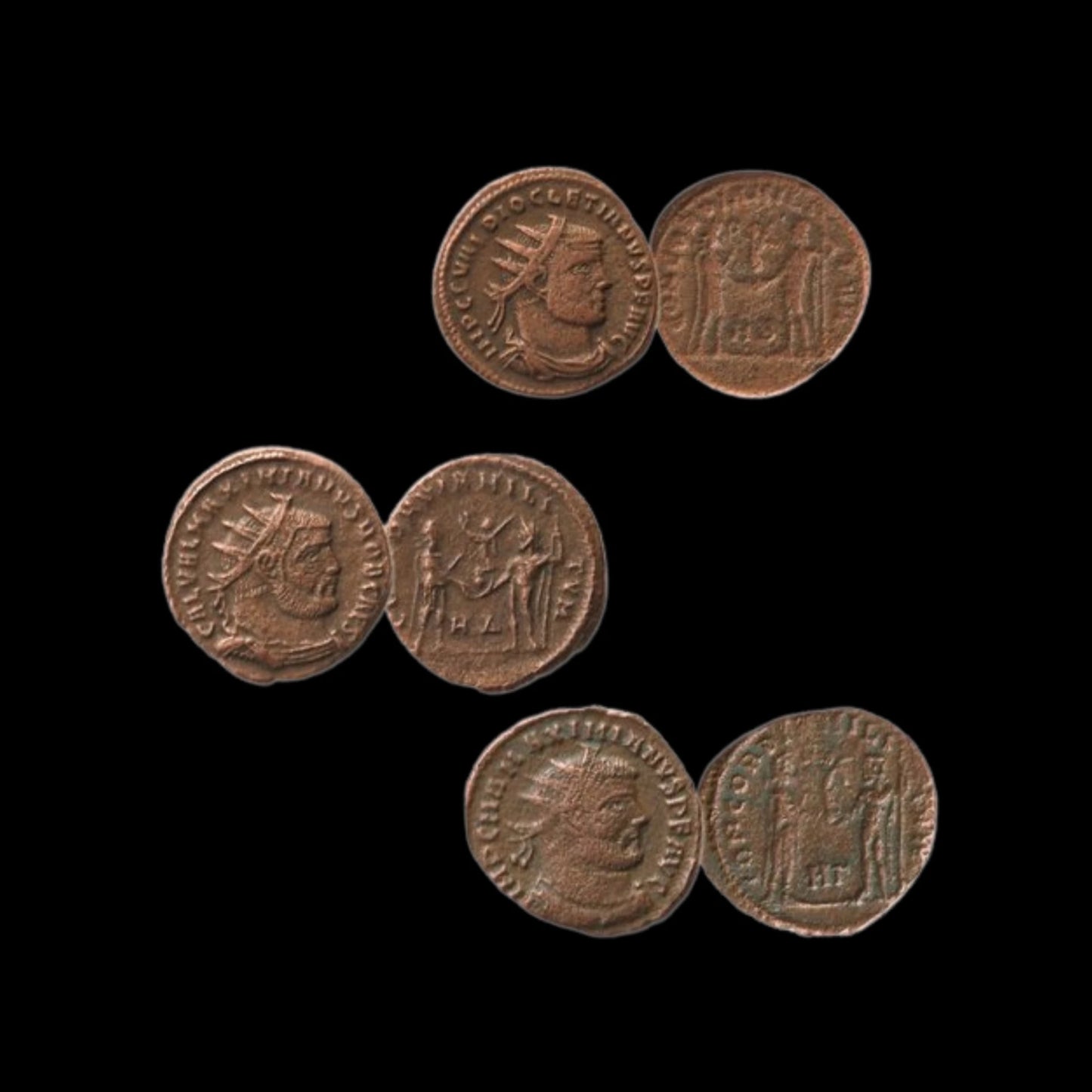
Great Persecution — Three Ancient Roman Coins of Diocletian, Maximian & Galerius
Great Persecution — Three Ancient Roman Coins of Diocletian, Maximian & Galerius
Couldn't load pickup availability
The Great Persecution — Three Coins of Diocletian, Maximian & Galerius
Own Coins from Rome’s Final Empire-Wide Persecution of Christians
A collection of three authentic Roman bronze coins from the reigns of Diocletian, Maximian, and Galerius—the rulers most closely associated with the Great Persecution beginning in AD 303.
✓ Guaranteed Authentic
✓ Carefully Sourced and Verified
✓ 30-Day Returns
📷 Coins shown are representative examples. You will receive one authentic Roman bronze coin of each ruler. Individual coins will vary in mint, reverse type, strike, centering, patina, and preservation.
✝ Connected to Rome’s final large-scale imperial persecution of Christians
⚔ Features three rulers of the Tetrarchic system
🤲 Three authentic Roman coins from the late 3rd and early 4th centuries AD
Why This Collection Matters
Beginning in AD 303, the imperial government issued a series of measures against Christians. Churches were ordered destroyed, scriptures surrendered or burned, assemblies restricted, and Christians were compelled in varying degrees to participate in traditional sacrifice. Punishments could include loss of status or property, imprisonment, torture, and execution.
Enforcement differed significantly by region and ruler, so the Great Persecution should not be imagined as a perfectly uniform policy carried out identically across the empire.
Diocletian approved the first persecuting measures. Galerius is generally regarded as one of the strongest advocates for continuing and intensifying them. Maximian, as western Augustus, enforced imperial religious policy within his sphere, though local implementation varied.
The policy did not succeed in suppressing Christianity. In AD 311, Galerius issued an edict of toleration permitting Christians to assemble again provided they prayed for the welfare of the state.
Two years later, Constantine and Licinius agreed on a broader policy of religious toleration and restitution commonly associated with the Edict of Milan. That settlement restored confiscated Christian property and helped establish a much more favorable legal environment for Christians, but it should not be reduced to a simple one-day “legalization” of Christianity.
These coins are not relics of individual acts of persecution. They are genuine pieces of the monetary world of the rulers under whom those policies were enacted and reversed.
What You’ll Receive
- One authentic bronze coin of Diocletian
- One authentic bronze coin of Maximian
- One authentic bronze coin of Galerius
- Period: Late 3rd–Early 4th Century AD
- Denomination: Roman bronze; exact type may vary
- Representative examples shown (each collection is unique)
Buy with Confidence
- Guaranteed authentic ancient coins
- Carefully sourced and verified
- 30-day return policy
- Secure shipping from the U.S.
Learn More

Continue the story in the Kinzer Coins Journal: Diocletian's Coinage Reform: The Nummus, Argenteus and Rome's Monetary Reset.