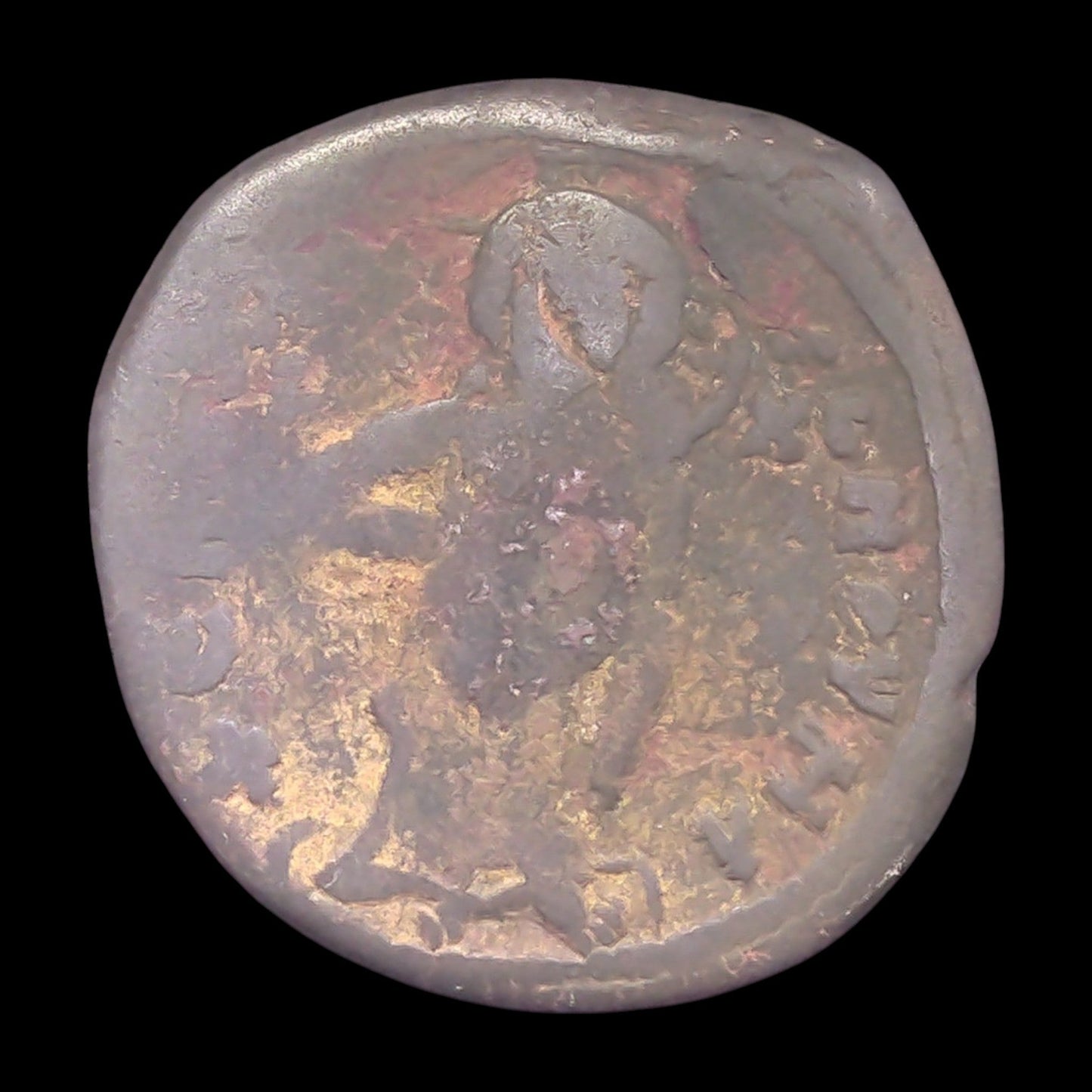
Constantine X Ancient Byzantine Bronze Coin — Rare Islamic Counterstamp, Mardin Hoard (AD 1059–1067)
Constantine X Ancient Byzantine Bronze Coin — Rare Islamic Counterstamp, Mardin Hoard (AD 1059–1067)
Couldn't load pickup availability
Byzantine Bronze Coin with Islamic Counterstamp — Two Monetary Worlds on One Coin
Own a Byzantine Coin Reused in Medieval Upper Mesopotamia
The exact Byzantine bronze coin of Constantine X Doukas shown, later bearing an Arabic counterstamp traditionally associated with the medieval Islamic rulers of the region around Amid and Mardin.
✓ Guaranteed Authentic
✓ Exact Coin Shown
✓ 30-Day Returns
☦ Originally struck by the Byzantine Empire and later counterstamped in an Islamic political context
🏛 Reported from the Mardin Hoard
🤲 The exact historic coin pictured is the one you'll receive
Own This Piece of History
Why This Coin Matters
Originally struck during the reign of Constantine X Doukas (AD 1059–1067), this Byzantine bronze survived into a period when political control and monetary circulation in Upper Mesopotamia had changed dramatically.
The coin bears an Arabic counterstamp read as “Shams”. Counterstamps of this general group have been associated with the Islamic rulers of the region and are often connected in the numismatic trade and literature with Shams al-Din Mahmud of Amid, an Inalid ruler of the twelfth century.
That specific personal attribution should be treated with caution, however. A short counterstamp reading such as “Shams” does not by itself prove that this individual coin was stamped on the direct order of Shams al-Din Mahmud, and the precise attribution of medieval counterstamp groups can depend on hoard context and specialist classification.
What the coin demonstrates securely is fascinating enough: an older Byzantine bronze remained useful in a region that had passed into a different political and cultural world, and an Arabic counterstamp gave the already-circulating object a new official or monetary identity.
This practice illustrates how medieval economies crossed political, linguistic, and religious boundaries. Byzantine coins could remain in circulation beyond Byzantine-controlled territory rather than simply disappearing when borders changed.
Reported as part of the Mardin Hoard, this specimen is therefore both a Byzantine coin and evidence for the complex monetary environment of medieval Upper Mesopotamia.
Perfect For
- Byzantine history enthusiasts
- Islamic coin collectors
- Collectors interested in countermarks and overstrikes
- Students of medieval trade and frontier economies
- Anyone looking for a coin connecting two historical worlds
Coin Details
- The exact Byzantine bronze coin with Arabic counterstamp pictured
- Original Ruler: Constantine X Doukas (AD 1059–1067)
- Later Context: Medieval Islamic Upper Mesopotamia
- Counterstamp: Arabic “Shams,” traditionally associated with an Inalid context
- Mint: Originally Constantinople
- Denomination: Byzantine bronze follis with later counterstamp
- Reported Provenance: Mardin Hoard
- Reference: Sear Byzantine 1853 • Counterstamp 9
- Guaranteed authentic
Buy with Confidence
- Guaranteed authentic historic coin
- Carefully sourced and attributed
- 30-day return policy
- Secure shipping from the U.S.
Learn More

Continue the story in the Kinzer Coins Journal: Artuqid Coins of Mardin: Figural Islamic Coinage Explained.