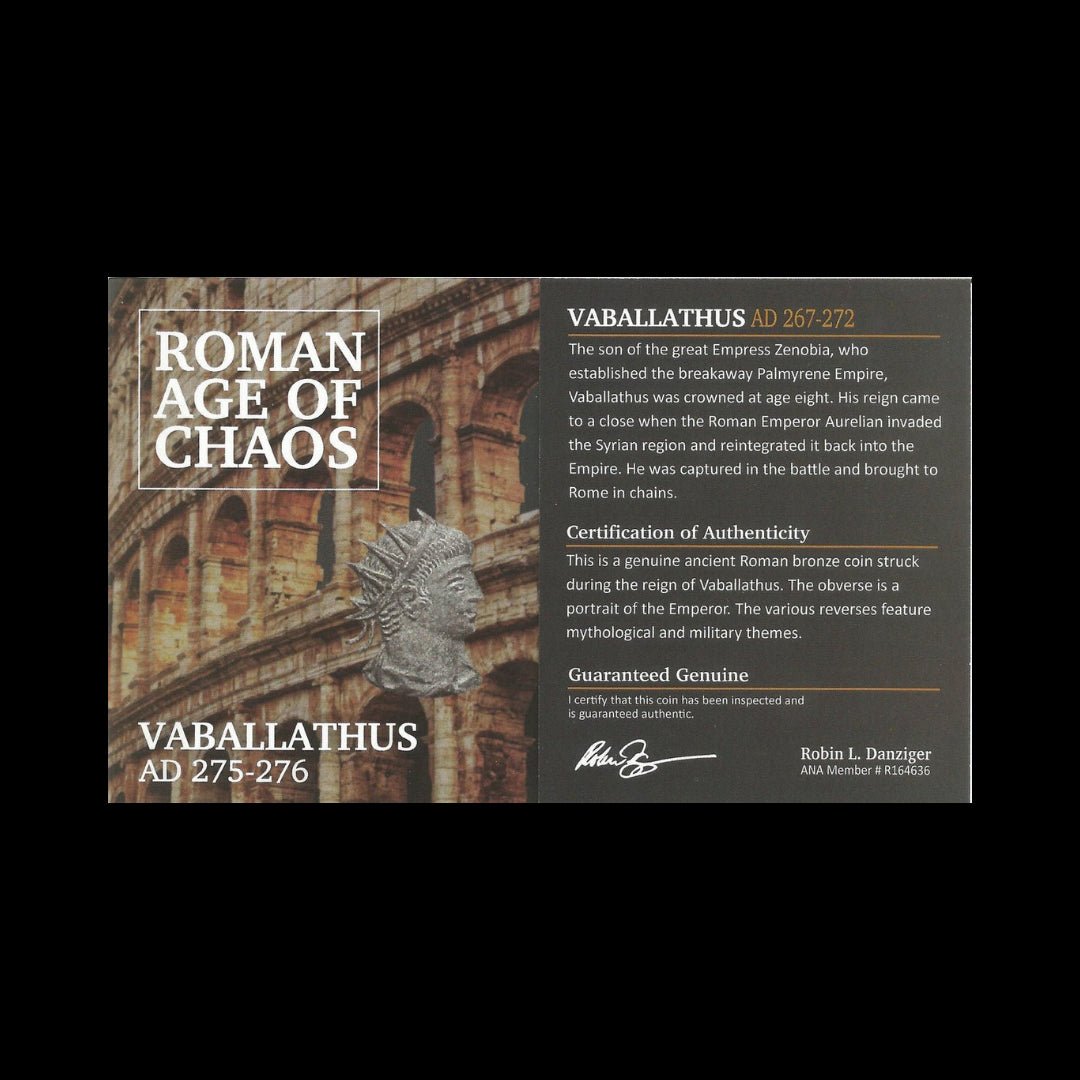
Vabalathus & Aurelian Ancient Roman Antoninianus — Rome and Palmyra (AD 271–272) — NGC Certified
Vabalathus & Aurelian Ancient Roman Antoninianus — Rome and Palmyra (AD 271–272) — NGC Certified
Couldn't load pickup availability
Vabalathus & Aurelian Antoninianus — Rome and Palmyra
Own a Coin from the Uneasy Relationship Between Aurelian and Palmyra
A genuine NGC-certified antoninianus naming both Vabalathus and Aurelian, struck at Antioch while Zenobia and her son controlled much of Rome’s eastern provinces but still acknowledged Aurelian’s superior imperial title.
✓ NGC Certified
✓ Guaranteed Authentic
✓ 30-Day Returns
📷 Coin shown is a representative example. You will receive one authentic NGC-certified Vabalathus/Aurelian antoninianus. Each coin is unique and will vary in grade, strike, centering, preservation, silvering, and overall appearance.
👑 Names Aurelian as Augustus while Vabalathus bears eastern and Roman titles short of Augustus on this issue
🌴 Struck at Antioch while the Palmyrene regime controlled Egypt and extensive territories across the Roman East
⚔ Issued shortly before open conflict between Aurelian and Zenobia’s Palmyrene government
Own This Piece of History
Why This Coin Matters
Few third-century coins illustrate political ambiguity as clearly as the issues naming Aurelian and Vabalathus.
After the death of Odaenathus, Zenobia governed Palmyra and its expanding territories on behalf of her son Vabalathus. Palmyrene forces eventually controlled Egypt and large portions of the Roman East.
Yet the regime did not immediately present itself as completely independent of Rome. At Antioch, coins were struck that named both Vabalathus and Aurelian. Aurelian retained the title Augustus, while Vabalathus was identified with a collection of titles reflecting his powerful position in the East.
It is tempting to describe this as a formal diplomatic compromise between two equal rulers, but the coinage does not establish such a treaty or partnership. Instead, it shows the complicated political language used while Palmyra exercised extensive practical autonomy without initially abandoning recognition of Aurelian’s imperial supremacy.
That ambiguity ended as Zenobia and Vabalathus adopted full imperial titles and Aurelian marched east in AD 272. Roman victories at Immae and Emesa broke Palmyrene resistance, and Aurelian recovered Palmyra and the eastern provinces.
Zenobia’s ultimate fate is uncertain. Later sources preserve stories that Aurelian spared her and that she lived in Italy, but the evidence is not strong enough to present that tradition as certain.
This coin therefore captures something more interesting than a simple alliance: a moment when the boundaries between Roman authority, regional autonomy, and outright imperial rivalry were still being negotiated.
Perfect For
- Collectors of Aurelian and the Crisis of the Third Century
- Collectors interested in Zenobia and Palmyra
- Students of Roman provincial power and imperial legitimacy
- NGC-certified ancient coin collectors
- Anyone looking for an unusually direct artifact of Rome’s fractured third century
What You’ll Receive
- One authentic NGC-certified antoninianus naming Vabalathus and Aurelian
- Mint: Antioch
- Period: c. AD 270–272
- Denomination: Antoninianus
- Historical context: Palmyrene control of the Roman East
- Representative example (each coin is unique)
Buy with Confidence
- NGC certified
- Carefully sourced and attributed
- 30-day return policy
- Secure shipping from the U.S.
Learn More

Continue the story in the Kinzer Coins Journal: Aurelian and Vabalathus Coins: Rome, Zenobia and Palmyra.