Kinzer Coins
Own Three Coins from the Eastern World of the Magi
Own Three Coins from the Eastern World of the Magi
Couldn't load pickup availability
Three Coins from the Eastern World of the New Testament Era
Explore the Wider Eastern Setting Traditionally Associated with the Magi
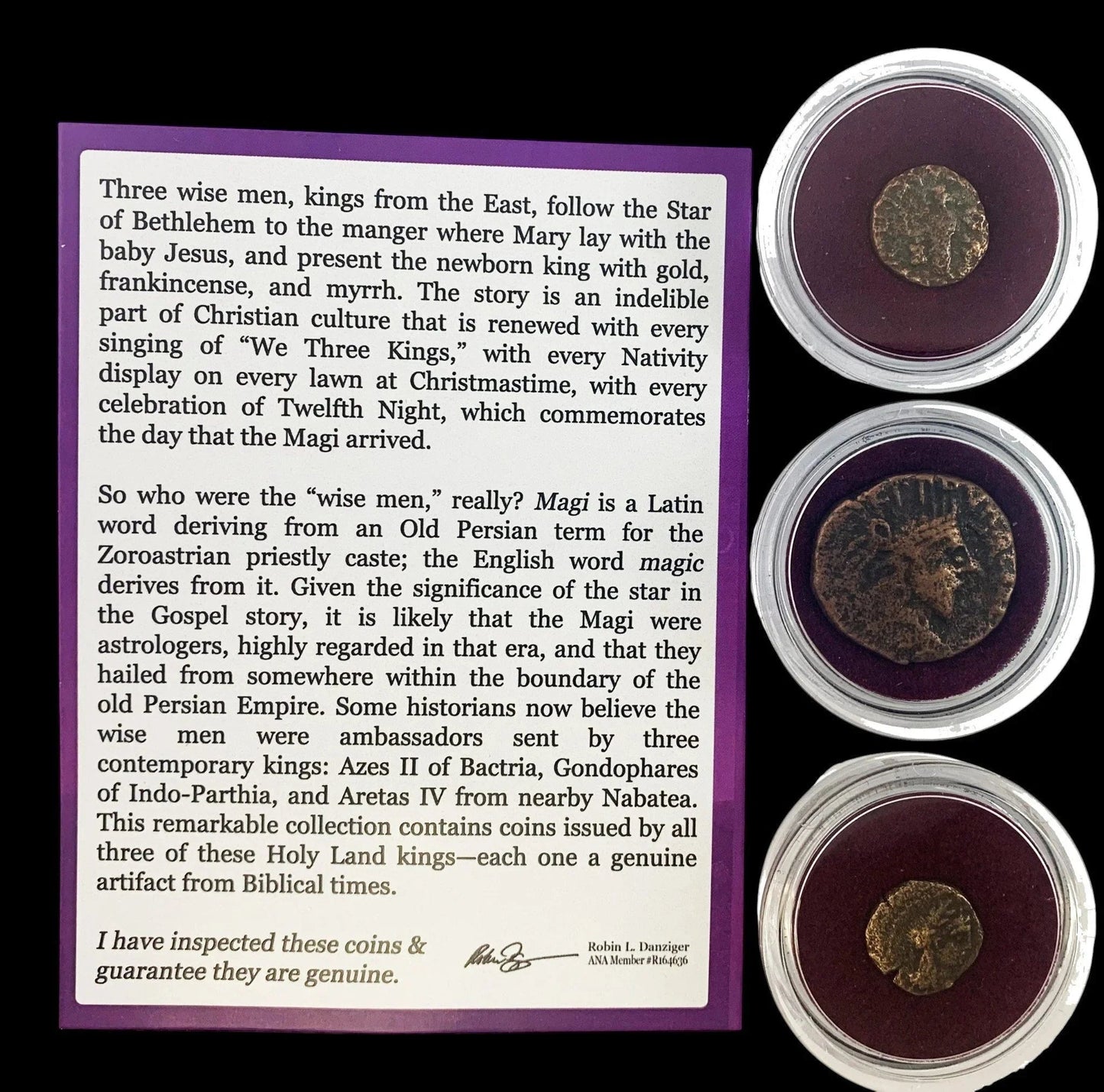
A collection of three authentic ancient coins representing Indo-Scythian, Indo-Parthian, and Nabataean kingdoms of the broader eastern world around the beginning of the Common Era.
✓ Three Authentic Ancient Coins
✓ Guaranteed Authentic
✓ 30-Day Returns
📷 Coins shown are representative examples. You will receive three authentic ancient coins representing Azes-type Indo-Scythian coinage, Gondophares or his Indo-Parthian world, and Aretas IV. Exact rulers, types, denominations, dates, strike, patina, and preservation may vary according to available inventory and attribution.
⭐ Explores kingdoms and trade networks east and southeast of Judaea around the New Testament era
🎁 Provides historical context for the broader eastern world traditionally associated with Matthew’s Magi
🤲 Three authentic coins connecting Arabia, the Indo-Iranian world, and the Holy Land’s wider commercial environment
Own This Piece of History
Why This Collection Matters
The Gospel of Matthew describes visitors called Magi who came “from the east” to Jerusalem and Bethlehem. Matthew does not state their number, name their homeland, identify their ruler, or explain their precise social or religious status.
Later traditions greatly expanded the story. The Greek term magoi had associations with eastern religious specialists and learned figures, particularly in connection with the Iranian world, but it is too strong to claim that Matthew definitively identified his visitors as members of one specific Persian priestly caste.
This collection therefore does not attempt to identify the Magi. Instead, it uses authentic coinage to explore several kingdoms belonging to the much wider eastern world connected by trade and political networks around the turn of the era.
Azes-type Indo-Scythian coinage comes from the culturally mixed regions of northwestern South Asia and the Indo-Iranian frontier. Greek, Iranian, Central Asian, and South Asian traditions all influenced this monetary world. The traditional division between Azes I and Azes II remains debated, so individual coins should follow their specific attribution.
Gondophares ruled an Indo-Parthian kingdom in the 1st century AD. Later Christian tradition associates a king named Gundaphar/Gondophares with the Apostle Thomas, but Gondophares belongs too late to be securely tied to the Nativity and no ancient source connects him with Matthew’s Magi.
Aretas IV ruled the Nabataean kingdom from approximately 9 BC to AD 40. Nabataea controlled important Arabian trade routes carrying goods including aromatics and incense, and Aretas is indirectly connected with the New Testament world through the reference to the ethnarch of King Aretas in 2 Corinthians 11:32.
Together, these coins provide a tangible introduction to the eastern kingdoms and long-distance networks surrounding Judaea. They are historical context for the world in which the Magi story was told—not evidence identifying where the Magi came from or who sent them.
Perfect For
- Biblical and New Testament history enthusiasts
- Collectors interested in ancient Arabia and the Indo-Iranian world
- Students of ancient trade and cultural exchange
- First-time ancient coin collectors
- Anyone interested in exploring the historical setting behind later Magi traditions
What You’ll Receive
- Three authentic ancient coins representing the eastern kingdoms described above
- Civilizations: Indo-Scythian, Indo-Parthian, and Nabataean
- Period: Broadly late 1st Century BC–1st Century AD, depending on the individual coins supplied
- Presented in a premium collector display box
- Guaranteed authentic
- Representative examples (each collection is unique)
Buy with Confidence
- Guaranteed authentic ancient coins
- Carefully sourced and attributed
- 30-day return policy
- Secure shipping from the U.S.