Kinzer Coins
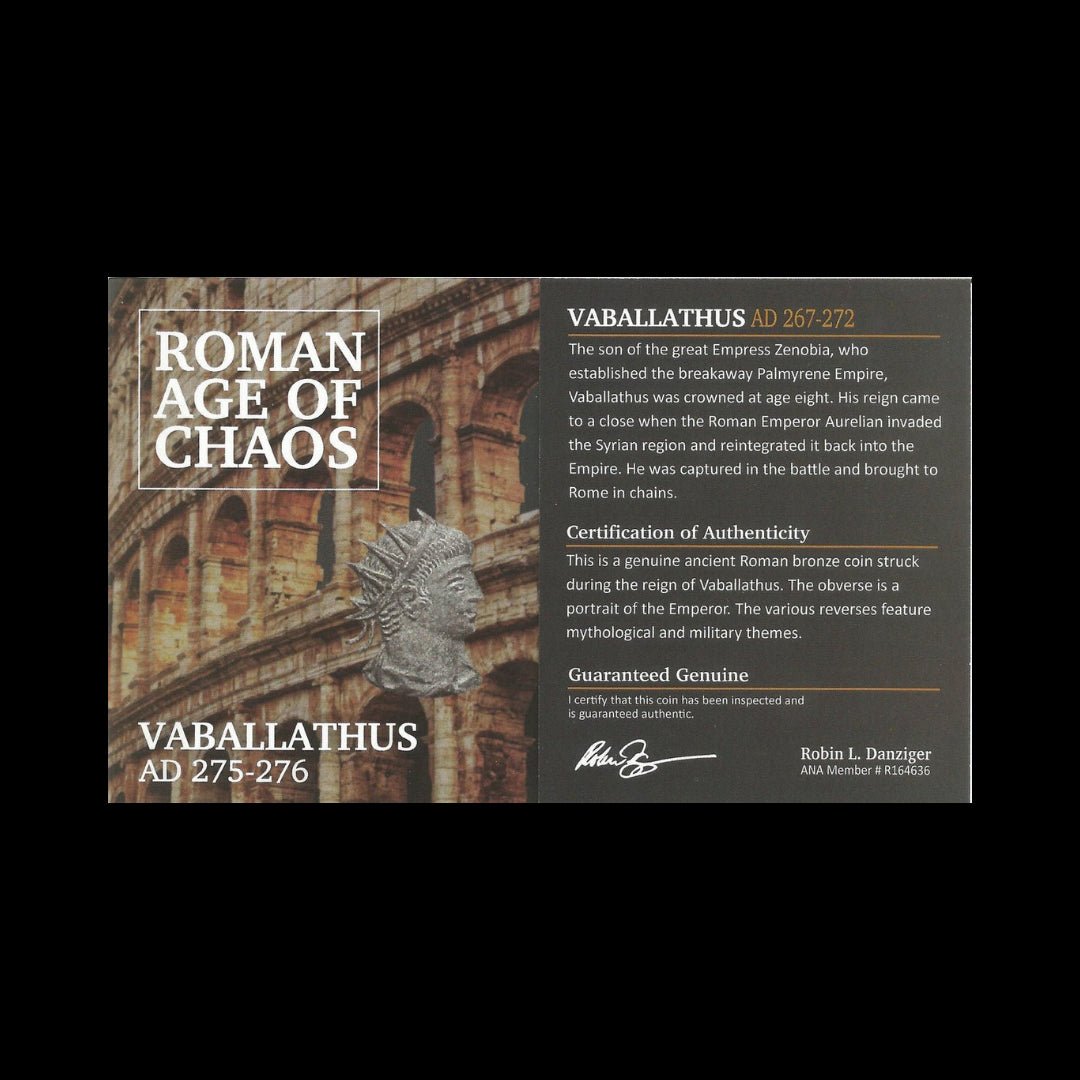
Vabalathus & Aurelian Bronze — Rome & Palmyra, AD 271–272
Vabalathus & Aurelian Bronze — Rome & Palmyra, AD 271–272
Couldn't load pickup availability
Own a Coin Bearing Two Rulers — the Last Moment Before Aurelian Destroyed the Palmyrene Empire
A real bronze of Aurelian and Vabalathus — one of the most unusual dual-portrait coins in Roman numismatics, struck during the fragile political arrangement that allowed Palmyra to acknowledge Rome's supremacy while retaining eastern control, just before Aurelian ended the arrangement by force in AD 272. NGC certified.
✓ NGC Certified
✓ Guaranteed Authentic
✓ 30-Day Returns
👑 Bears the portraits of both Vabalathus and Aurelian — Palmyrene regional authority and Roman imperial supremacy acknowledged simultaneously on a single coin
🌴 Struck at Antioch or Alexandria during the brief compromise that allowed Zenobia's son to hold eastern titles while nominally deferring to Rome
🤲 A rare artifact from the exact moment before Aurelian marched east and ended the Palmyrene Empire permanently in AD 272. NGC certified.
Own This Piece of History
Why This Coin Matters
After the chaos of the Third Century Crisis, the eastern provinces had drifted under the control of Palmyra — the magnificent desert city in modern Syria whose queen, Zenobia, had seized Egypt, Syria, and much of Asia Minor in the name of her young son Vabalathus. The arrangement was militarily pragmatic: Rome was too distracted by other crises to contest it immediately, and Zenobia maintained the fiction of Roman loyalty while building what was effectively an independent eastern empire.
This coin represents the final phase of that fiction. When Aurelian became emperor in AD 270 and began systematically reuniting the fractured empire, he initially chose negotiation over confrontation with Palmyra. The arrangement that produced this dual-portrait coin allowed Vabalathus to hold eastern titles — his portrait and claims of regional authority on one side — while Aurelian's portrait or imperial symbols on the other side affirmed Rome's ultimate supremacy. Coins struck at Antioch and Alexandria during this period bear both rulers simultaneously, making them among the most historically specific and visually unusual issues in the entire Roman series.
The arrangement was always temporary. By AD 272, Aurelian had secured his western position sufficiently to move east. His forces defeated Zenobia's armies at the battles of Immae and Emesa, captured Palmyra itself, and took Zenobia prisoner. She was paraded through Rome in golden chains at Aurelian's triumph — and then, in a characteristic display of Aurelian's pragmatic clemency, was permitted to live out her days as a Roman noblewoman in Tivoli. The Palmyrene Empire was finished. This bronze, struck during the brief window when Aurelian and Vabalathus appeared together on the same coin as nominal co-authorities, is a tangible record of a political compromise that lasted just long enough to be commemorated in metal. Certified by NGC.
Perfect for:
- Collectors of Palmyrene Empire, Aurelian era, and Roman dual-portrait bronze coinage
- History lovers drawn to Zenobia, Vabalathus, and the eastern secession that Aurelian ended
- Dual-authority coin, Antioch or Alexandria mint, and NGC certified unusual type enthusiasts
- Anyone seeking one of the most visually and historically distinctive coins of the entire Third Century Crisis
What You'll Receive
- One authentic bronze of Aurelian and Vabalathus — dual-portrait issue
- Denomination: AE Bronze
- Mint: Antioch or Alexandria
- NGC certified for authenticity and preservation
- Struck AD 270–272 — similar to examples shown (each coin is unique)
Buy with Confidence
- Guaranteed authentic ancient coin
- Carefully sourced and verified
- 30-day return policy
- Secure shipping from the U.S.
New to Ancient Coins?
Start your journey here: kinzercoins.com/collections/im-new-to-ancient-coins
Share