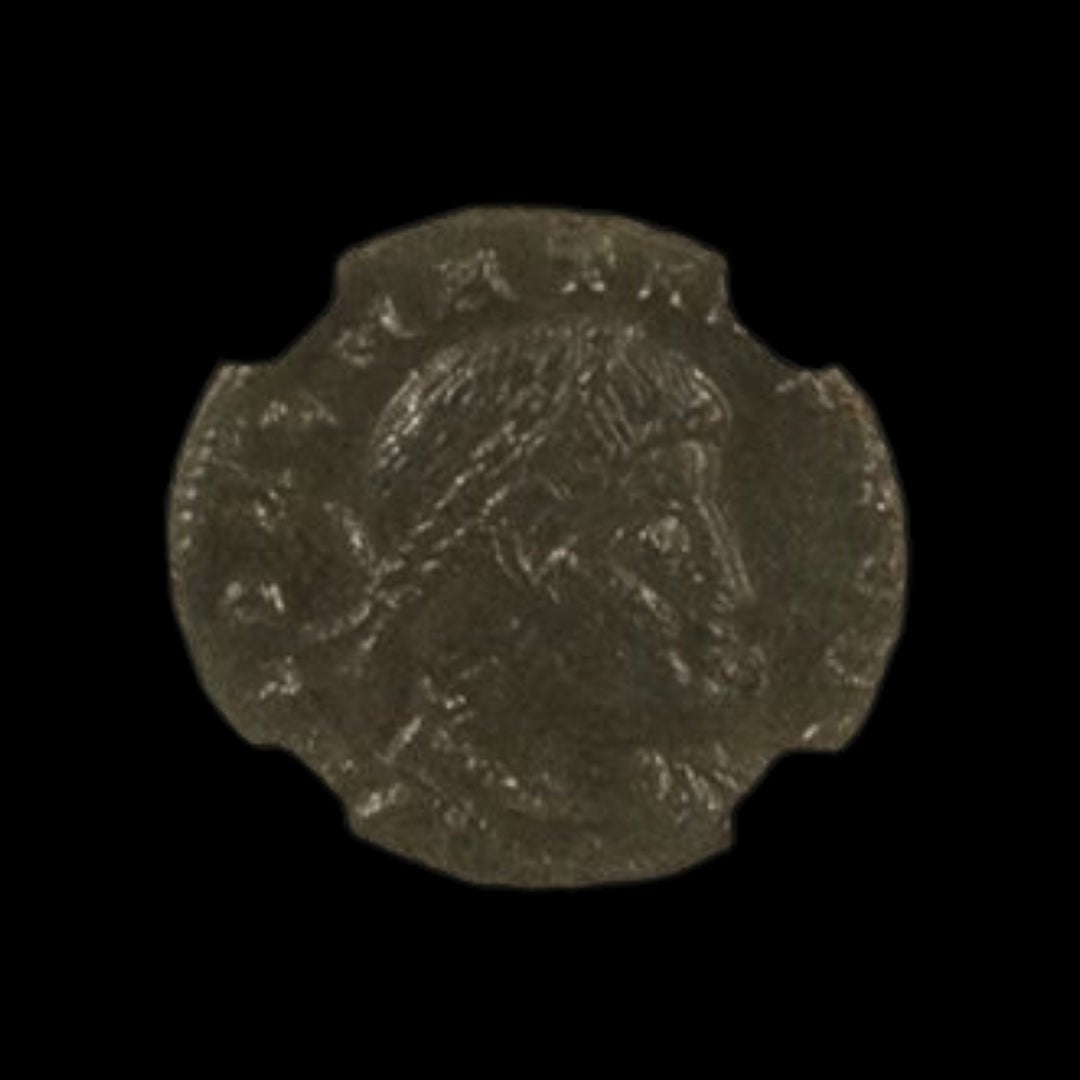
Jovian Ancient Roman Bronze Coin — Christian Emperor After Julian (AD 363–364) — NGC Certified
Jovian Ancient Roman Bronze Coin — Christian Emperor After Julian (AD 363–364) — NGC Certified
Couldn't load pickup availability
Jovian AE3 — The Emperor Who Saved His Army at the Cost of Rome's Frontier
Own a Bronze Coin from the Emperor Who Surrendered Roman Territory to Save His Army
A real Roman AE3 bronze of Jovian—the officer unexpectedly chosen emperor after Julian II's death in Persia, who negotiated a controversial peace to rescue a stranded Roman army, reinstated imperial support for Christianity after Julian's reign, and died only eight months later under circumstances that remain uncertain. NGC certified.
✓ NGC Certified
✓ Guaranteed Authentic
✓ 30-Day Returns
📷 Coin shown is a representative example. You will receive one authentic NGC-certified AE3 bronze of Jovian. Each coin is unique and will vary in grade, strike, centering, preservation, patina, and individual appearance.
☮️ Issued during the reign of the emperor who surrendered key Roman frontier cities—including Nisibis—to secure the withdrawal of the Roman army from Persia
✝ Issued under a Christian emperor who reversed Julian's anti-Christian measures and restored imperial support to Christianity while traditional religions continued to be practiced
🤲 An NGC-certified bronze struck during one of the shortest and most consequential reigns of the Late Roman Empire
Own This Piece of History
Why This Coin Matters
In AD 363, Emperor Julian II died during his Persian campaign, leaving the Roman army deep in hostile territory. The senior officers selected Jovian, commander of the imperial bodyguard, as emperor.
Jovian's most consequential decision came almost immediately. Facing a dangerous retreat, he negotiated peace with Shapur II. Rome surrendered several eastern strongholds, including Nisibis, in exchange for safe withdrawal. Ancient and modern historians have debated the treaty ever since, but the military situation was clearly severe.
Jovian was a Christian and reversed Julian's anti-Christian policies, restoring privileges and imperial support to Christian institutions. His short reign did not eliminate the religious pluralism of the Roman world, and it should not be described as the moment Christianity became the empire's official religion.
His reign lasted only about eight months. While traveling toward Constantinople in AD 364, Jovian died at Dadastana. Ancient sources offer several possible explanations, but the actual cause remains uncertain.
This AE3 bronze comes from that brief transitional reign, connecting Rome's Persian frontier crisis with the religious and political changes that followed Julian.
Perfect For
- Collectors of Late Roman imperial coinage
- Students of Roman and Persian history
- Enthusiasts of Julian II and Jovian
- NGC-certified ancient coin collectors
What You'll Receive
- One authentic Roman AE3 bronze of Jovian
- Civilization: Roman Empire
- Ruler: Jovian (AD 363–364)
- Denomination: AE3 Bronze
- NGC certified and encapsulated
- Representative example of the type (each coin is unique)
Buy with Confidence
- NGC certified
- Carefully sourced and verified
- 30-day return policy
- Secure shipping from the U.S.
Learn More

Continue the story in the Kinzer Coins Journal: Julian II Coins: The Philosopher Emperor and His Bull Reverse.