Kinzer Coins
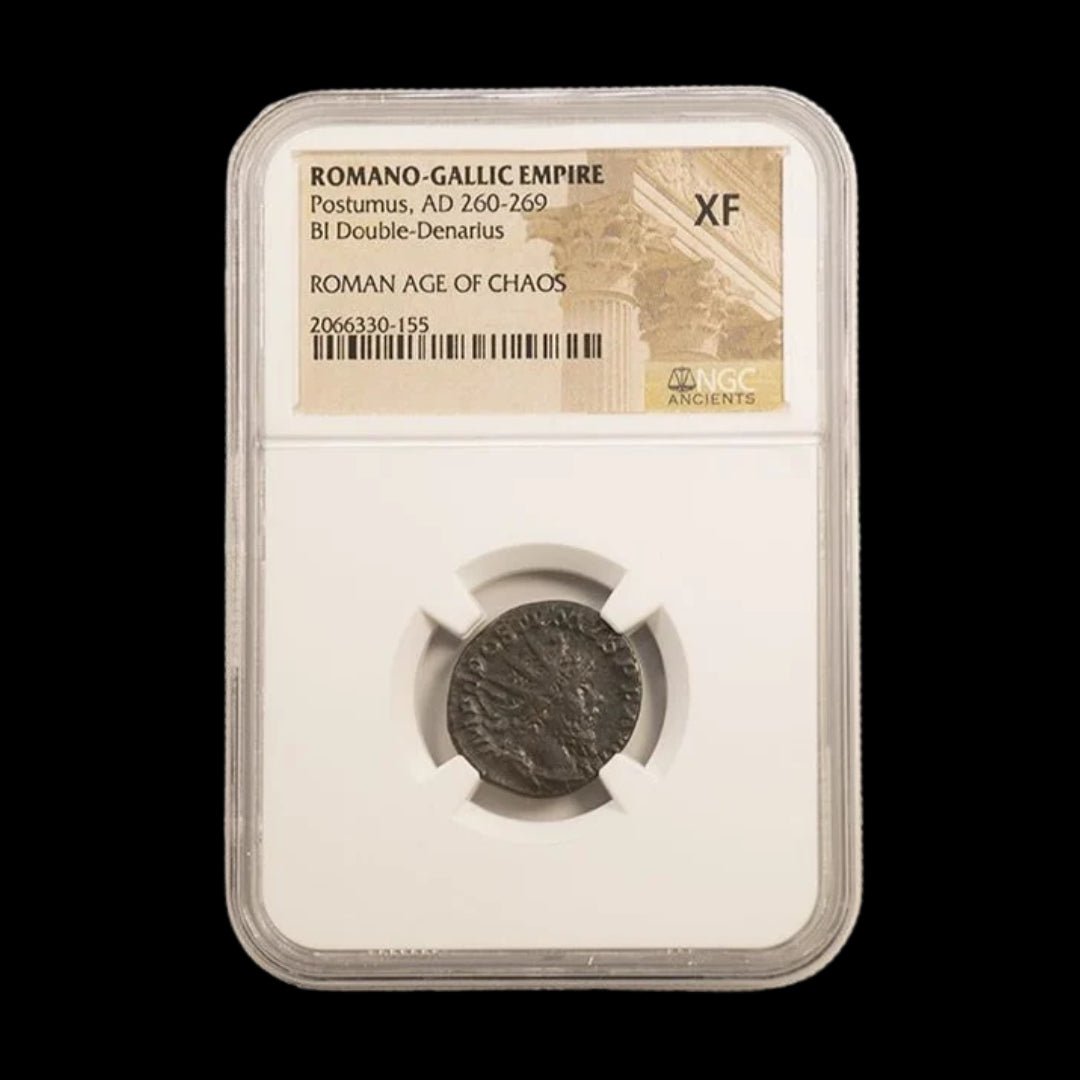
Postumus Ancient Roman Antoninianus — Founder of the Gallic Empire (AD 260–269) — NGC Certified
Postumus Ancient Roman Antoninianus — Founder of the Gallic Empire (AD 260–269) — NGC Certified
Couldn't load pickup availability
Postumus Antoninianus — Founder of the Gallic Empire
Own a Coin from Rome's Western Breakaway State
A genuine NGC-certified antoninianus of Postumus—the frontier commander proclaimed emperor in AD 260 who established the breakaway state modern historians call the Gallic Empire.
✓ NGC Certified
✓ Guaranteed Authentic
✓ 30-Day Returns
📷 Coins shown are representative examples. You will receive one authentic NGC-certified antoninianus of Postumus. Each coin is unique and will vary in grade, strike, centering, silvering, reverse type, and overall appearance.
⚔ Ruled Gaul, Britain, parts of Germania, and for at least part of his reign Hispania
🏛 Issued a substantial independent imperial coinage while maintaining Roman governmental forms
🤲 A genuine coin from one of the most successful breakaway regimes of the Crisis of the Third Century
Own This Piece of History
Why This Coin Matters
In AD 260, the Roman Empire was under extraordinary pressure. Emperor Valerian had been captured by the Sasanian king Shapur I, invasions threatened several frontiers, and political authority fragmented rapidly.
In the Rhine provinces, Postumus was proclaimed emperor after a conflict involving the young imperial prince Saloninus.
Rather than gaining control of the entire Roman Empire, Postumus established a durable western breakaway regime centered on Gaul and the Rhine. Britain and parts of Germania recognized him, and Hispania appears to have done so for at least part of the period.
Modern historians call this state the Gallic Empire. It maintained recognizably Roman institutions, appointed consuls, fielded armies, and issued its own imperial coinage.
Claims that it possessed a fully documented separate Senate should be treated cautiously. Later sources imply Roman-style governmental structures, but the exact institutional organization of the breakaway state is not known in every detail.
Postumus successfully defended the Rhine frontier and resisted attempts by Gallienus to remove him. His coinage regularly invoked Hercules, Victory, Peace, Providence, and other familiar Roman themes of strength, legitimacy, and stability.
Those reverse types tell us what Postumus wanted his government to project; they should not be taken as proof that every province enjoyed uniform prosperity or that western populations universally preferred his rule.
In AD 269, after suppressing the revolt of Laelianus at Mainz, Postumus was killed by his own troops. Ancient tradition connects the mutiny with his refusal to allow the city to be plundered.
This coin preserves the portrait and official messaging of a ruler who governed a large section of the Roman West independently for nearly a decade.
Perfect For
- Collectors of the Gallic Empire
- Crisis of the Third Century enthusiasts
- Roman frontier-history collectors
- NGC-certified ancient coin collectors
- Collectors of usurpers and breakaway states
What You'll Receive
- One authentic NGC-certified antoninianus of Postumus
- Ruler: Postumus
- Period: AD 260–269
- Authority: Gallic Empire / Roman breakaway regime
- Denomination: Antoninianus
- Representative example shown (each coin is unique)
Buy with Confidence
- NGC certified
- Carefully sourced and attributed
- 30-day return policy
- Secure shipping from the U.S.
Learn More

Continue the story in the Kinzer Coins Journal: Roman Usurpers & Their Coins: Rival Emperors Collector’s Guide.