Kinzer Coins
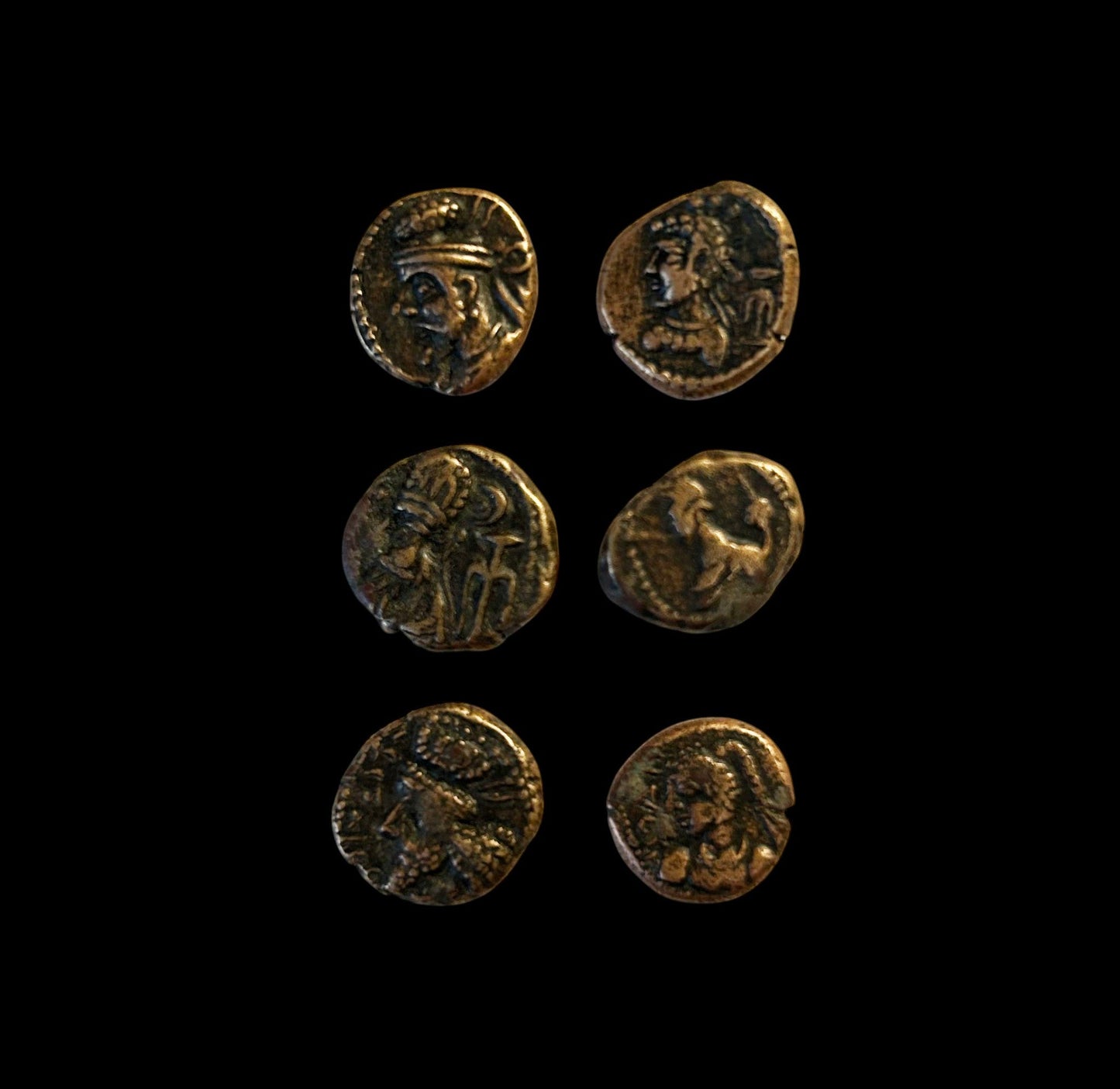
Gods of Homer — Three Ancient Elymais Coins: Apollo, Artemis & Aphrodite
Gods of Homer — Three Ancient Elymais Coins: Apollo, Artemis & Aphrodite
Couldn't load pickup availability
Gods of Homer — Three Ancient Elymais Coins
Own Ancient Coins Depicting Apollo, Artemis & Aphrodite
A collection of three authentic ancient bronze coins from the Kingdom of Elymais, depicting Apollo, Artemis, and Aphrodite—deities whose myths are deeply connected to the legendary world surrounding the Trojan War and Homeric tradition.
✓ Three Authentic Ancient Bronze Coins
✓ Guaranteed Authentic
✓ 30-Day Returns
📷 Photos show representative examples. You will receive three authentic Elymaean bronze coins: one depicting Apollo, one Artemis, and one Aphrodite. Individual coins will vary in strike, centering, patina, wear, and surface characteristics.
🏛 Ancient Elymais, in the historic region of Elam
⚡ Greek-derived religious imagery surviving far beyond the classical Greek world
🤲 Three genuine ancient coins connecting Hellenistic cultural influence with the mythology familiar from Greek epic
Own This Piece of History
Why This Set Matters
Apollo, Artemis, and Aphrodite were major deities of the Greek religious and mythological world, and each appears in traditions connected with the Trojan War.
Apollo supports the Trojans in Homer’s Iliad and is associated with prophecy, music, healing, plague, and archery. Later traditions—not the Iliad itself—connect Apollo with the death of Achilles.
Artemis, Apollo’s twin sister, was associated with hunting, wilderness, childbirth, and young women. The story that Agamemnon offended Artemis at Aulis and that Iphigenia was to be sacrificed appears in the wider Greek mythological tradition surrounding the Trojan expedition rather than in Homer’s surviving epics themselves.
Aphrodite plays an important role in the Iliad, especially as the divine protector of Paris and the Trojans. The famous Judgment of Paris—in which Paris awards Aphrodite the prize after she promises him Helen—belongs to the broader Trojan War myth cycle and provides a traditional explanation for the conflict’s origins.
These coins were struck many centuries after the period in which the Trojan War was traditionally imagined to have occurred. They should therefore be understood as evidence for the long afterlife and geographic reach of Greek-derived religious imagery—not as coins from Homer’s own age or from the Trojan War.
About the Coins
The coins come from the Kingdom of Elymais, an ancient polity centered in the historic region of Elam. Elymaean coinage developed within a region shaped by Persian and local traditions as well as centuries of interaction with Seleucid, Parthian, and broader Hellenistic culture.
The use of Greek-derived divine imagery on Elymaean coins illustrates cultural continuity and adaptation long after Alexander’s conquests. It does not mean Elymais was simply a Greek kingdom or that these coins circulated in Homeric Greece.
Representative examples in this set are associated with the later Elymaean royal coinage of the Roman-period centuries. Attribution to individual rulers can be difficult and scholarly classifications of some Elymaean issues vary, so the attribution supplied with each coin should govern the individual specimen.
Perfect For
- Fans of Homer and the Trojan War tradition
- Greek mythology enthusiasts
- Collectors interested in Elymais and the ancient Near East
- Students of Hellenistic cultural influence
- First-time ancient coin collectors
What You’ll Receive
- Three authentic ancient bronze coins from Elymais
- One coin depicting Apollo
- One coin depicting Artemis
- One coin depicting Aphrodite
- Guaranteed authentic
Please note: exact ruler attribution and date may vary by specimen. The coins are ancient Elymaean issues using Greek-derived deity imagery; they are not coins from the age of Homer or the Trojan War.
Buy with Confidence
- Guaranteed authentic ancient coins
- Carefully sourced and attributed
- 30-day return policy
- Secure shipping from the U.S.
Learn More

Continue the story in the Kinzer Coins Journal: Can You Collect Coins from The Odyssey? Exploring Homer's World Through Ancient Coinage.