Kinzer Coins
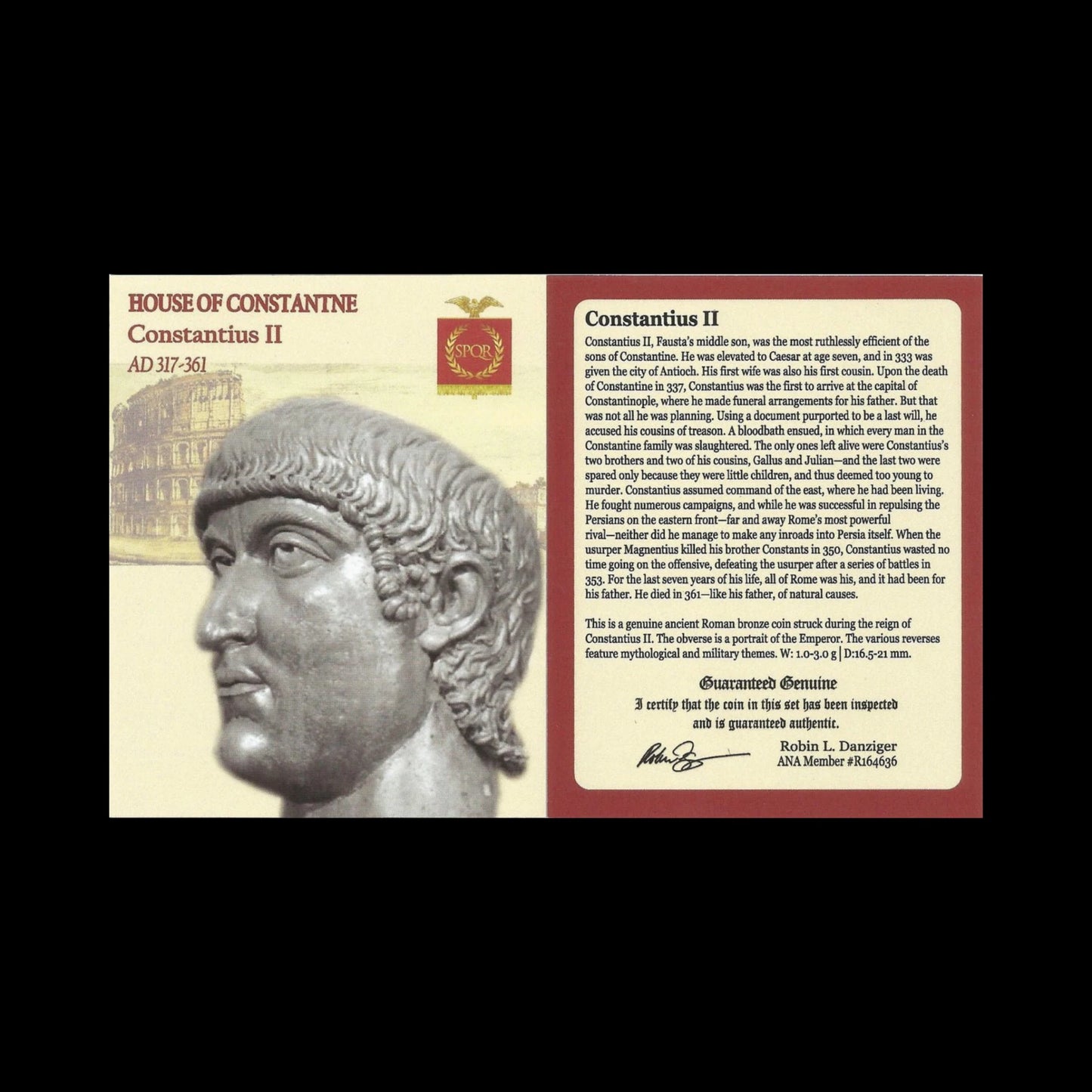
Ancient Roman Bronze Coin of Emperor Constantius II (c. AD 340, Son of Constantine the Great)
Couldn't load pickup availability
Own a Bronze Coin from the Emperor Who Ruled Rome Alone for a Decade — After Eliminating Everyone Who Might Rival Him
A real AE3/4 bronze of Constantius II — the seven-year-old Caesar who outlasted all his brothers, defeated every usurper, survived a generation of dynastic purges, and governed the Christian Roman Empire as its sole ruler from AD 350 to 361 before being outmaneuvered by his own cousin Julian. NGC certified.
✓ NGC Certified
✓ Guaranteed Authentic
✓ 30-Day Returns
✝ From the emperor who presided over Christianity's consolidation as Rome's dominant religion — though his support for Arian Christianity rather than Nicene orthodoxy made him a controversial figure in church history
🏛 Reverse depicts military standards, Victory, soldiers, or Chi-Rho symbolism — the coinage of an empire where Christian and traditional Roman visual vocabularies were still negotiating their relationship
🤲 Struck AD 337–361 — from the son of Constantine who governed Rome's most consequential religious transformation as its longest-reigning 4th-century emperor. NGC certified.
Own This Piece of History
Why This Coin Matters
Constantius II was elevated to Caesar at approximately seven years old — one of the youngest such appointments in Roman history — and spent the next three decades accumulating power through a combination of political ruthlessness, military persistence, and sheer survival. When his father Constantine I died in AD 337, the army's massacre of most male relatives left only Constantius and his brothers as viable claimants. When Constantine II invaded Constans's territory and was killed in AD 340, there were two. When Constans was murdered in a military coup by the usurper Magnentius in AD 350, Constantius was one — and spent the next three years eliminating Magnentius before becoming sole emperor in AD 353.
As sole ruler, Constantius governed from his power base at Antioch — the great eastern city that served as his preferred administrative center — managing simultaneous pressures from Sasanian Persia in the east and Germanic tribes on the Rhine and Danube simultaneously. His religious policy was among the most consequential of any Roman emperor: a committed supporter of Arian Christianity rather than the Nicene formula that his father's Council of Nicaea had established, he actively worked to impose Arian theological positions on the church, exiling bishops who refused to conform and creating bitter divisions that would outlast his reign.
His end came through the cousin he had elevated to manage the western frontier. Julian — one of the two young relatives spared in the AD 337 massacre — was proclaimed emperor by his troops on the Rhine in AD 360. Constantius was marching west to confront him when he died of fever in AD 361, before the armies could meet. Julian became sole emperor without a battle. The Constantinian dynasty ended with the man it had spared. Certified by NGC.
Perfect for:
- Collectors of Constantinian dynasty, sons of Constantine, and Roman AE3/4 bronze coinage
- History lovers drawn to Constantius II, Arian Christianity, and the long reign that consolidated Christian Rome
- Military standards and Chi-Rho imagery, eastern empire coinage, and NGC certified 4th century bronze enthusiasts
- Anyone seeking a coin from the emperor whose reign defined the Christian Roman Empire's most consequential generation
What You'll Receive
- One authentic AE3/4 bronze of Constantius II
- Denomination: AE3/4 (small late Roman bronze)
- NGC certified for authenticity and preservation
- Struck AD 337–361 — similar to examples shown (each coin is unique)
Buy with Confidence
- Guaranteed authentic ancient coin
- Carefully sourced and verified
- 30-day return policy
- Secure shipping from the U.S.
New to Ancient Coins?
Start your journey here: kinzercoins.com/collections/im-new-to-ancient-coins
Share