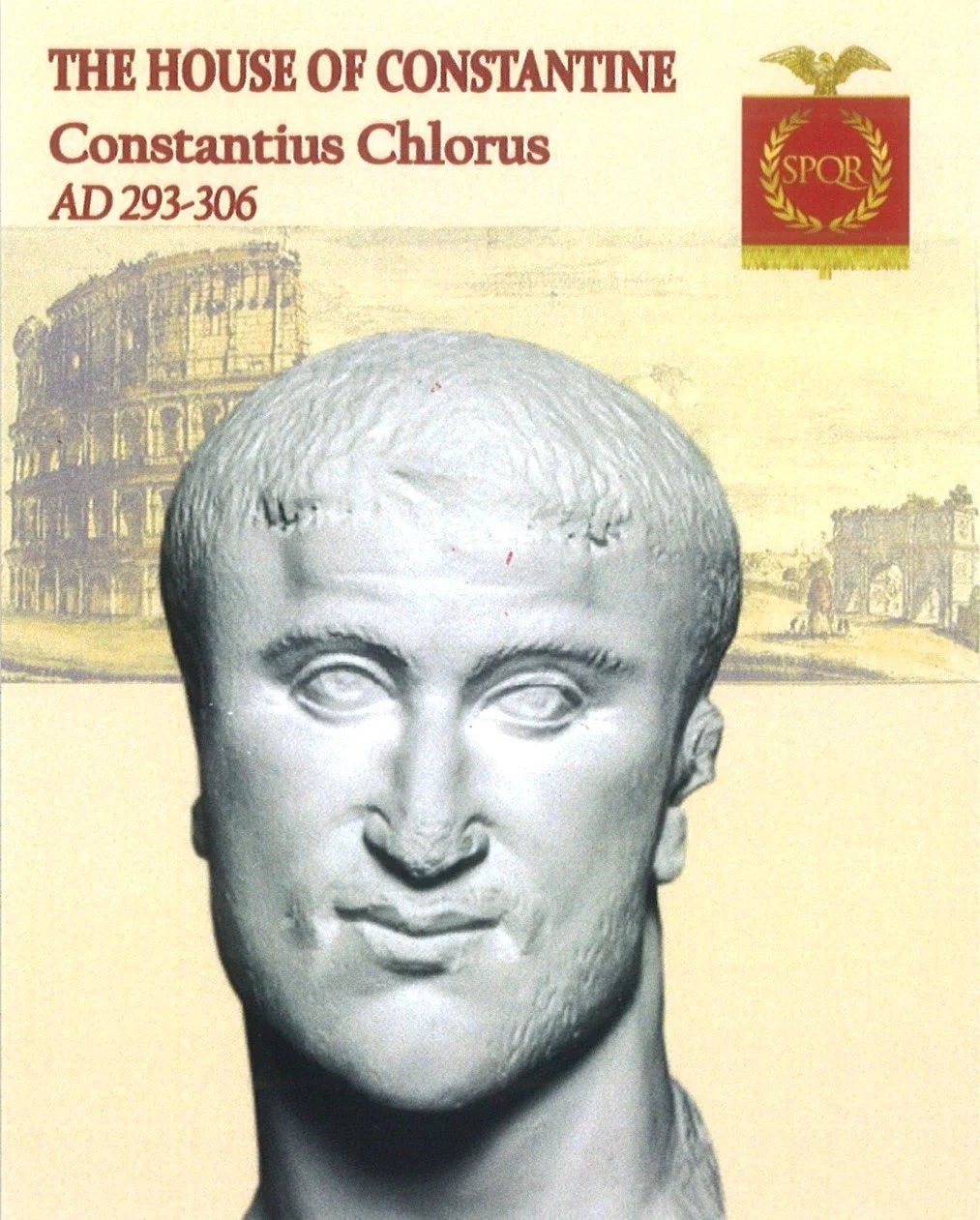
Constantius I Bronze AE1 — Father of Constantine, AD 293–306
Constantius I Bronze AE1 — Father of Constantine, AD 293–306
Couldn't load pickup availability
Constantius I Chlorus AE1 — The Father of Constantine the Great
Own a Bronze Coin from the Father of Constantine the Great—Who Died at York and Changed Roman History
A real Roman AE1 bronze of Constantius I Chlorus—the western emperor whose death at York in AD 306 led his soldiers to proclaim Constantine emperor, setting in motion one of the most consequential transformations in world history.
From $86.00
✓ NGC Certified
✓ Guaranteed Authentic
✓ 30-Day Returns
📷 Coin shown is a representative example. You will receive one authentic NGC-certified AE1 bronze of Constantius I Chlorus. Each coin is unique and will vary in grade, strike, centering, preservation, patina, and individual appearance.
👑 Issued during the reign of Constantius I Chlorus, father of Constantine the Great and one of the founding rulers of Diocletian's Tetrarchy
🏛 Features the military and civic imagery of the emperor who restored Roman control over Britain and laid the foundation for Constantine's rise
🤲 An NGC-certified bronze from the reign that directly led to the creation of the Christian Roman Empire
Own This Piece of History
Why This Coin Matters
Few Roman emperors changed history more through their death than through their life.
Constantius I Chlorus rose through the Roman army during the military reforms of the late third century before being appointed Caesar of the West by Emperor Diocletian in AD 293 as part of the new Tetrarchic system. To strengthen the political alliance, he divorced his longtime companion Helena—the future mother of Constantine—and married Theodora, the stepdaughter of Maximian.
He proved himself an exceptional commander.
In AD 296, Constantius launched a successful invasion of Britain, defeating the usurper Allectus and restoring the island to Roman control after years of separatist rule. His victories secured the northwestern frontier and established his reputation as one of the empire's most capable military leaders.
When Diocletian and Maximian abdicated in AD 305, Constantius became Augustus of the Western Roman Empire.
His reign as senior emperor lasted barely a year.
While campaigning against the Picts in northern Britain, Constantius died at Eboracum (modern York) in AD 306. His son Constantine was at his bedside. Almost immediately after his death, the Roman army proclaimed Constantine emperor, bypassing the carefully designed Tetrarchic succession.
That spontaneous decision changed history.
Constantine would ultimately defeat every rival, become sole ruler of the Roman Empire, legalize Christianity through the Edict of Milan, establish Constantinople as a new imperial capital, and permanently alter the course of Western civilization.
Ancient writers also describe Constantius as one of the more moderate rulers during the Great Persecution of Christians. While persecution was enforced vigorously in the eastern empire, Constantius appears to have carried out imperial policy with unusual restraint. Whether motivated by conviction or pragmatism, this atmosphere likely shaped the worldview of the young Constantine who served beside him.
This authentic AE1 bronze was struck during those pivotal years. More than an ancient coin, it is a tangible connection to the emperor whose legacy lived on through one of history's greatest rulers.
Perfect For
- Collectors of Tetrarchy and Constantinian coinage
- Students of Roman and early Christian history
- Enthusiasts of Constantine the Great and Roman Britain
- NGC-certified ancient coin collectors
- Anyone looking for a meaningful and historically significant gift
What You'll Receive
- One authentic Roman AE1 bronze of Constantius I Chlorus
- Civilization: Roman Empire
- Ruler: Constantius I Chlorus (Caesar AD 293–305, Augustus AD 305–306)
- Denomination: AE1 Bronze
- NGC certified for authenticity and preservation
- Presented in an NGC holder
- Representative example of the type (each coin is unique)
Continue the Story
Constantius I Chlorus ruled for only a short time as senior emperor, but his death became one of the defining moments in Roman history. From the military camp at York, his soldiers elevated Constantine to the purple, beginning the rise of the emperor who transformed Rome, reshaped Christianity, and founded Constantinople. Coins like this preserve the story of the father whose legacy changed the world.
Explore our other Roman, Byzantine, Biblical, Greek, medieval, and world coin collections to continue your journey through the rulers, civilizations, and events that changed history.
Buy with Confidence
- NGC certified for authenticity and preservation
- Carefully sourced and verified
- 30-day return policy
- Secure shipping from the U.S.
New to Ancient Coins?
Start your journey here:
kinzercoins.com/collections/im-new-to-ancient-coins
Learn More

Continue the story in the Kinzer Coins Journal: Diocletian's Coinage Reform: The Nummus, Argenteus and Rome's Monetary Reset.