

Collecting the Coins of Probus
Collecting the Coins of Probus
AD 276 to 282, the soldier-emperor who tried to restore Rome.
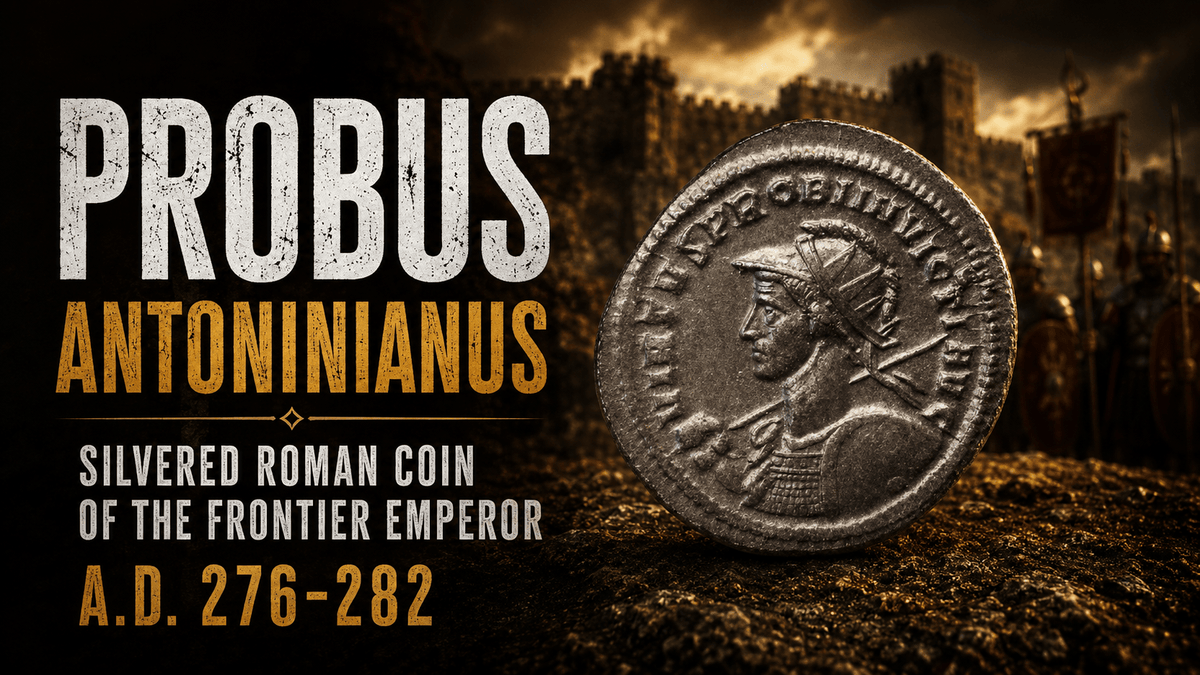
Probus ruled from AD 276 to 282 and left one of the richest late-third-century Roman coin series: elaborate military busts, numerous mints, coded officina marks, varied reverses, and many surviving coins with traces of their original silvered surface.
For collectors who enjoy attribution, mintmarks, and die style, few Roman emperors offer more variety at such an accessible price level.
Marcus Aurelius Probus was probably born around AD 232 at Sirmium in the Balkans. After the death of Tacitus in AD 276, Probus was proclaimed emperor by troops in the East and defeated the rival Florian. He then spent much of his reign campaigning against external enemies and suppressing usurpers across the empire, before being killed by his own soldiers near Sirmium in AD 282.
The Coinage of Probus
The principal denomination is usually called an antoninianus by collectors. Because the denomination had been reformed under Aurelian, specialists also use the term aurelianianus for these later radiate coins. By Probus's reign, the coin was a low-silver billon denomination, and the radiate crown on the emperor's portrait identifies the type's ancestry in the antoninianus tradition.
The coins contain only a small proportion of silver in the alloy, but newly minted pieces could have a silver-enriched or silvered surface that made them look much brighter than the base-metal core might suggest. Collectors often call this a "silver wash," but the ancient surface appearance was produced through minting and metallurgical treatment of a low-silver alloy, and surviving coins can retain anything from tiny patches to nearly complete original silvering.
Probus ruled at the heart of the Crisis of the Third Century, taking power after Tacitus and preceding Carus. His silvered radiates belong to the same denomination and the same turbulent era as those neighboring emperors, and a coin of that period is the natural way into the world Probus fought to hold together.

Bust Types, Reverses, and the Reform Mark
Probus's coinage includes an extraordinary range of portraits: radiate and cuirassed busts, helmeted busts, spear-and-shield types, consular dress, eagle-tipped scepters, and elaborate military compositions. Some of the most desirable examples show Probus in full military equipment rather than as a simple radiate head. Bust variety alone can support a highly specialized collection.
- Reverse themes, Sol, Jupiter, Mars, Victory, Pax, Providentia, and Concordia, with legends proclaiming restoration, courage, harmony with the army, security, and victory, Sol Invictus especially important in late-third-century imagery
- The reform mark, many reformed radiates carry XXI in Latin contexts or KA in Greek contexts, generally understood as a ratio of about one part silver to twenty parts base metal, roughly 5 percent silver, read together with mint and officina symbols
- The EQVITI code, a famous Ticinum specialty in which letters distributed across officinae combine to spell EQVITI, belonging to specific emissions and showing how carefully organized Roman mint production could be
Major mints include Rome, Ticinum, Siscia, Serdica, Lugdunum, Cyzicus, Antioch, and Tripolis, among others. Each mint can have recognizable differences in portrait style, reverse choice, officina system, and mintmark structure. That geographic range is one reason Probus is so attractive to specialists: a collector can build a set by mint, officina, reverse, bust, or emission.
How Should a Beginner Collect Probus?
Because ordinary Probus radiates are abundant, there is usually no need to accept poor centering or unreadable mintmarks unless the variety itself is scarce.
- A common radiate with clear legends and good silvering
- A military bust with spear and shield
- A Sol reverse
- Coins from two or three different mints
- An example with a clear XXI or KA reform mark
- A coded Ticinum EQVITI issue once basic mint attribution becomes comfortable
Probus is one of the best emperors for learning how a late Roman mint actually worked. His coins reward close attention to metal, bust, mint, officina, and emission, and common examples remain accessible enough that collectors can specialize without needing a rare-coin budget.
Frequently Asked Questions
Are Probus coins antoniniani?
Yes in standard collector terminology. Specialists may call the post-Aurelian reformed version an aurelianianus.
Are Probus antoniniani solid silver?
No. They are low-silver billon coins that were manufactured to present a silvered or silver-enriched surface when new.
What does XXI mean on a Probus coin?
It is generally connected with the reformed alloy standard and is commonly interpreted as indicating roughly one part silver to twenty parts base metal.
What is the EQVITI code?
It is a famous coded mintmark series at Ticinum in which letters distributed across officinae combine to spell EQVITI.
Why are there so many Probus varieties?
His reign used numerous active mints, multiple officinae, many portrait busts, frequent reverse types, and changing emissions, producing a huge number of collectible combinations.
Hold what the greats held.
Browse Late Roman Radiates at Kinzer Coins
Authentic late-third-century Roman coins with silvered surfaces, military busts, and rich mint variety, NGC-certified where available, guaranteed authentic, with 30-day returns.
Browse Roman Coins