

Cleopatra Coins: Portrait Bronzes, Silver & Mark Antony Issues
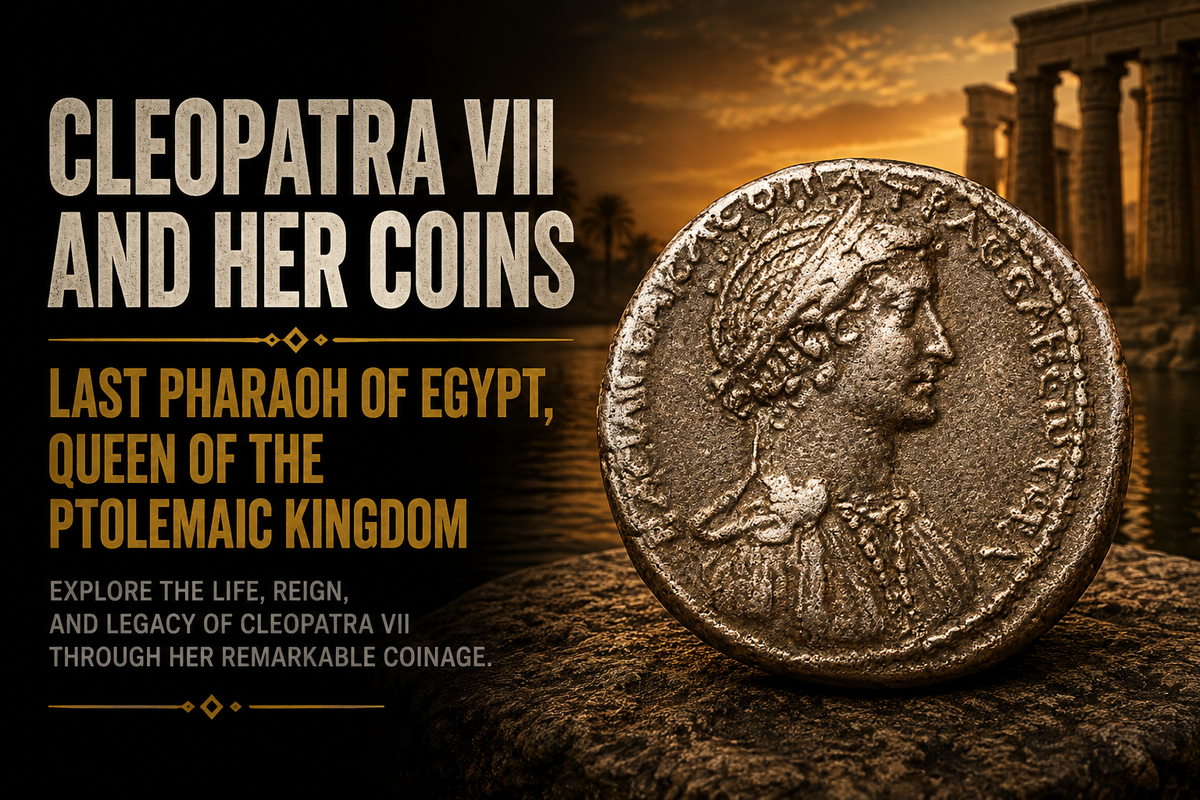
Cleopatra VII and Her Coins
Portrait bronzes, civic silver, and the joint issues with Mark Antony.
Cleopatra VII's portrait coinage is one of the most recognizable royal series of the late Hellenistic world. But collectors need to make an important distinction: not every Ptolemaic coin struck during Cleopatra's reign shows Cleopatra.
Standard Ptolemaic silver continued long-established dynastic designs, while coins that actually portray Cleopatra include bronzes from Egypt and other eastern mints, civic silver such as the tetradrachms of Ascalon, and joint issues with Mark Antony.
Who Was Cleopatra VII?
Cleopatra VII ruled Ptolemaic Egypt from 51 to 30 BC, at times with co-rulers in accordance with Ptolemaic dynastic practice. She was a capable monarch and diplomat who navigated Egypt through the final decades of Roman Republican expansion.
Her alliances with Julius Caesar and later Mark Antony placed Egypt at the center of Roman politics. After Antony and Cleopatra were defeated by Octavian's forces at Actium in 31 BC, both died in 30 BC and Egypt came under Roman rule.
What Did Cleopatra Look Like on Coins?
Cleopatra's coin portraits typically emphasize royal identity rather than modern ideals of beauty. She is shown diademed, often with a prominent nose, firm chin, and strongly individualized profile. Ancient royal portraiture was political imagery: the point was to identify and legitimize the ruler.
Coin portraits are also among the most important evidence used when scholars assess sculptural portraits proposed as Cleopatra, because surviving statues are not always securely identified.
Which Coins Actually Show Cleopatra?
Genuine Cleopatra portrait coins exist across several categories, but each requires careful attribution. These are the issues that actually depict her.
- Portrait bronzes, from areas under her authority or influence, including Damascus, Chalcis, and Cyprus in the late 30s BC, some Cypriot types possibly showing the young Caesarion
- Ascalon silver tetradrachms, rare civic silver dated 50 to 49 BC with a diademed Cleopatra portrait and eagle reverse
- Joint silver with Mark Antony, Levantine tetradrachms around 36 BC and a Roman Republican denarius of 32 BC pairing their portraits
- Joint and regional bronzes, eastern Mediterranean issues portraying Cleopatra alone or with Antony, with attribution varying by mint and authority
Each of these should be attributed by its specific mint, date, and reference rather than assumed. A genuine Cleopatra portrait tetradrachm is a very different object from an ordinary Ptolemaic tetradrachm that merely circulated during her reign.
What About Ordinary Ptolemaic Tetradrachms?
Many silver tetradrachms circulating in Cleopatra's Egypt preserve older Ptolemaic types, especially the portrait of Ptolemy I and the eagle-on-thunderbolt reverse. Those coins belong to the monetary world of Cleopatra's reign, but they are not automatically portrait coins of Cleopatra.
This distinction matters for both historical accuracy and buying decisions. A dealer description should identify the ruler, mint, date, and type rather than calling any late Ptolemaic silver "a Cleopatra coin" simply because it may have been struck or circulated while she ruled.
If you want an authentic coin from Cleopatra's own era rather than a portrait that cannot be confirmed, the genuine bronze coinage of Roman Judaea from the reign of Augustus is a good and honest option. It was struck in the years surrounding Cleopatra's death and Egypt's absorption into Rome, contemporary with her world without pretending to bear her face.

Cleopatra and Caesarion
Caesarion, Ptolemy XV, was Cleopatra's son and later co-ruler. Some coin types have been interpreted as showing Cleopatra with the young Caesarion, particularly in Cyprus. Because the identification and symbolism of some issues are debated, they should be described with the level of certainty supported by the reference used.
How to Collect Cleopatra Coins
For a collector who wants a coin that actually shows Cleopatra, portrait bronzes are often the most realistic place to begin, though price and availability vary greatly by mint and condition. Joint Antony-Cleopatra silver and portrait tetradrachms are more specialized acquisitions.
A broader historical collection can also include standard Ptolemaic coinage from her reign, but it should be labeled accurately as dynastic or reign-period coinage rather than portrait coinage when Cleopatra is not depicted. The single most important principle in collecting Cleopatra is honest attribution: know exactly what a coin shows, who issued it, and where, before you buy.
History wasn't just written. It was minted.
Frequently Asked Questions
Do all Cleopatra-era tetradrachms show Cleopatra?
No. Many Ptolemaic tetradrachms retained traditional dynastic designs and do not portray her.
Are there silver coins with Cleopatra's portrait?
Yes. Examples include an Ascalon tetradrachm and joint silver issues with Mark Antony, including Levantine tetradrachms and a Roman Republican denarius.
Are Cleopatra portrait bronzes common?
Some types are more available than her major silver portrait issues, but rarity varies substantially by mint, denomination, preservation, and exact attribution.
Did Cleopatra appear with Caesarion on coins?
Some types, especially Cypriot bronzes, have been interpreted as showing Cleopatra with the young Caesarion, but the iconography should be described cautiously.
Browse Ancient Coins at Kinzer Coins
Authentic ancient coins from across the Hellenistic and Roman world, NGC-certified where available, guaranteed authentic, with 30-day returns on every purchase.
Browse Greek Coins